
Base Set 1st Edition "Alpha" and "Beta" holos
English Base Set 1st Edition holos are usually treated as a single variation. Among collectors who look closely there are two recognizable groups, informally called "alpha" and "beta", separated by the weight of the 1st Edition stamp and the angle of the halftone dot...
English Base Set 1st Edition holos are usually treated as a single variation. Among collectors who look closely there are two recognizable groups, informally called "alpha" and "beta". They are separated by two things that appear to move together: the weight of the 1st Edition stamp on the front, and the angle of the halftone dot screen on the back.
This is not an officially recognized distinction, and no grader labels it. It is the kind of detail that only matters to deep collectors, and in most cases it needs a magnified image to call with confidence.
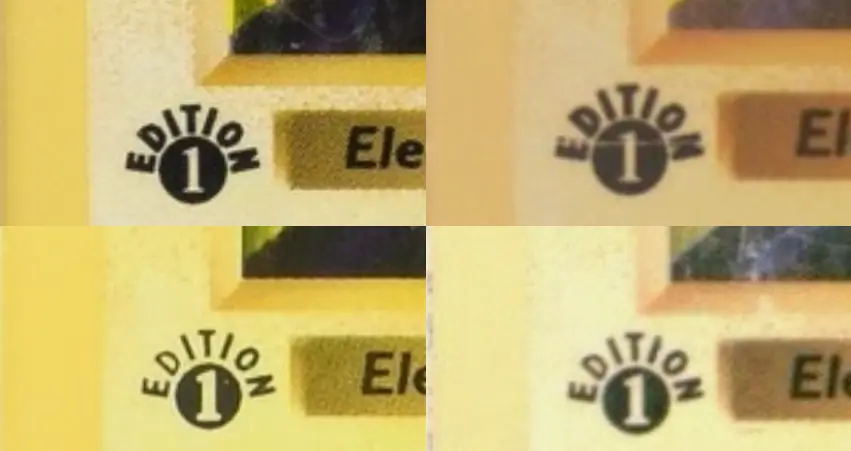
The stamp
The front tell is the "1" inside the 1st Edition stamp. On an alpha card the "1" is noticeably wider, with a thicker stroke and a heavier circle around it. This is why it is often just called the "thick stamp". On a beta card the same "1" is thinner, and the circle is finer.
The difference is small. At normal viewing distance, in hand, most people cannot separate them. Under magnification it is obvious.
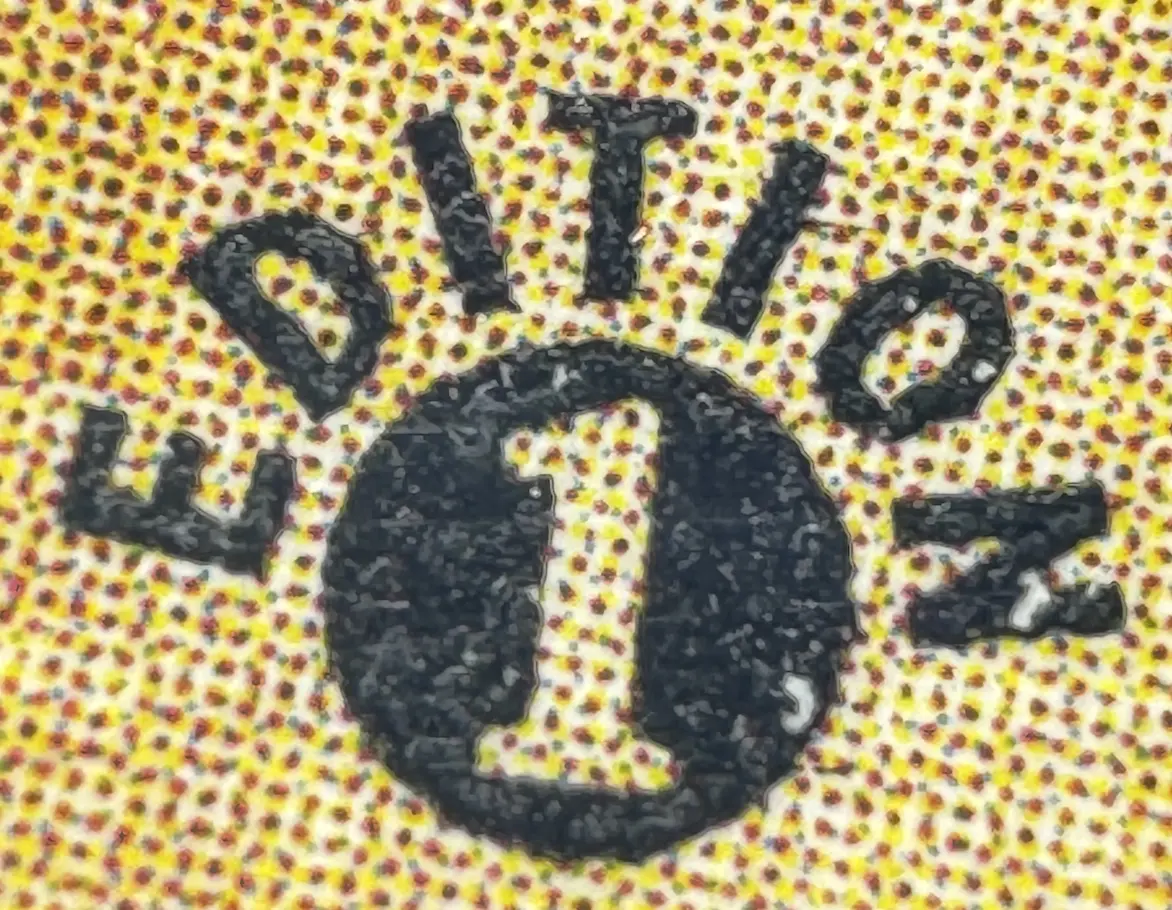
The practical version of this test is a graded card scan. Grading companies photograph the front of a slabbed card at consistent lighting and resolution, and once you have a few side by side the stamp weight sorts itself out. The four stamps at the top of this post are from graded scans, and the difference in the width of the "1" and the weight of the circle is readable without any special equipment.
The magenta dot matrix angle
The stronger tell is on the back of the card. Offset printing lays each ink down as a screen of dots rotated to its own angle, and the two groups use screens rotated in opposite directions.
The easiest place to check is the "N" in "POKÉMON" on the card back. On an alpha card the rows of dots run across the diagonal strokes of the letter, at roughly a +15 degree angle.

On a beta card, the same rows run downward instead, at roughly -15 degrees. Once you know the letter to look at, this is the fastest way to sort a card, and it does not depend on how heavily the stamp was inked.
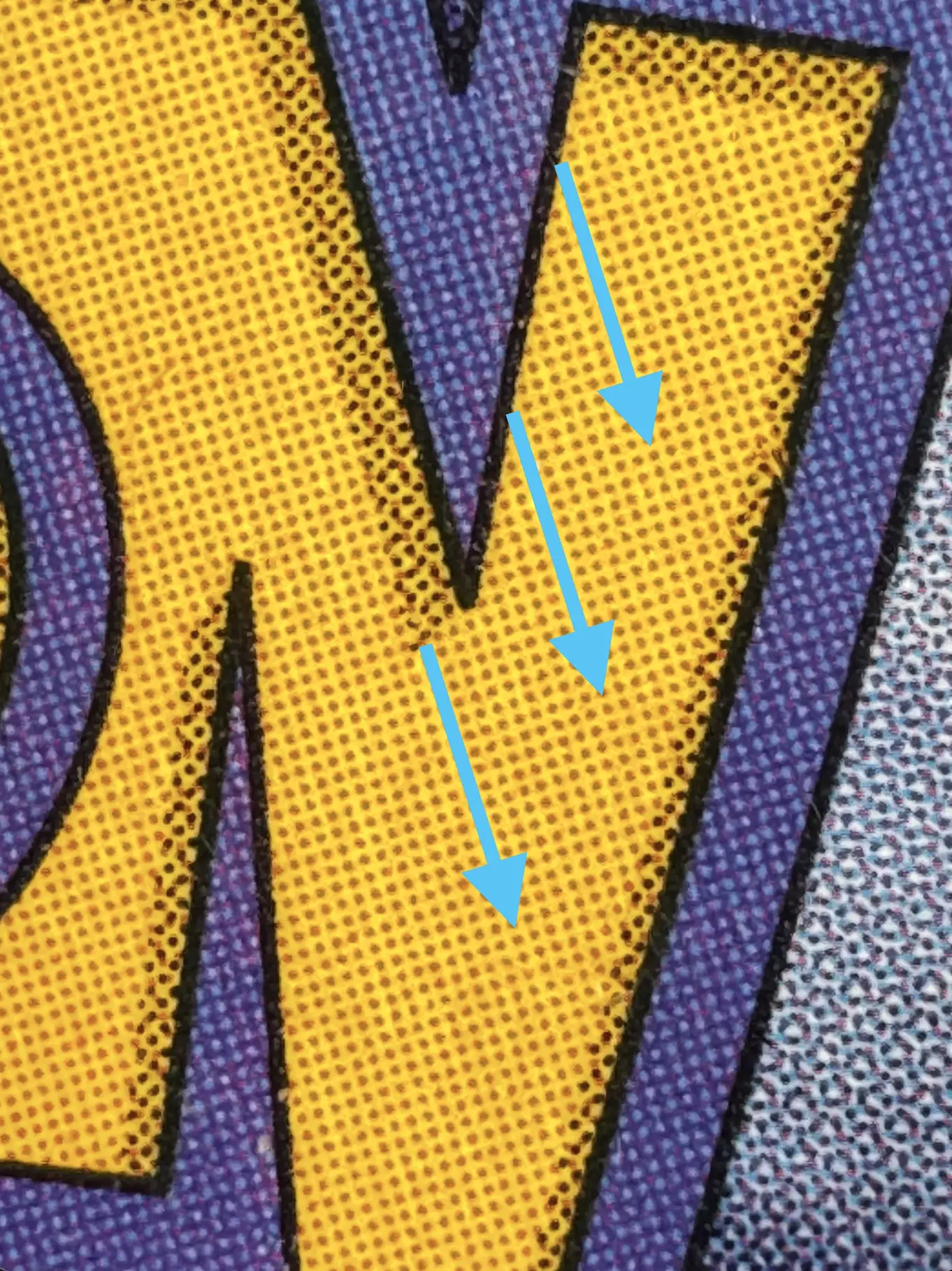
This needs a macro photo or a loupe. A phone camera close-up is usually enough if the card is out of a sleeve and lit from the side, though a slabbed card back is harder because of the case.
Scope and rarity
A few limits are worth being explicit about:
This applies to English Base Set only.
It applies to the holographic rares, which are the cards that carry the 1st Edition stamp in the holo print run.
It is a distinction in the printing, not a distinction in the card itself. Both groups are normal, released 1st Edition cards.
On rarity, the honest answer is that no one has published a count. From watching auctions, alpha cards appear less frequently than beta cards. That is an impression from a small and self-selected sample, not a measurement, and it is worth treating carefully. Because the distinction is not cataloged anywhere, and not visible in most listing photos, there is no market data separating the two, and no realistic way to build a proper population count from sold listings.
That gap is a large part of why the distinction is interesting. There is no broad categorization of these cards, so the only people tracking them are the people willing to zoom in.
Tracking it in TopVault
TopVault lets you attach an optional Remark to any collectible in your collection, and Base Set 1st Edition holos come with the Alpha and Beta remarks and their descriptions already filled in. When you add or edit one of these cards, the remark is a dropdown with the identification notes attached, so you do not have to write the criteria out yourself or remember which angle went with which group.
This is exactly what remarks are meant for: a detail that is real, repeatable, and specific to a card, but not significant enough to justify a separate database entry.
If you have Base Set 1st Edition holos, this is a good excuse to look at a card you have owned for years. Check the "1", then check the "N".
If you have counts of your own, or evidence that the split lines up with something else in the print run, please feel free to reach out at [email protected] or @t5trades on Instagram.